
Case study · Migration · UK
Moving a site off Lovable without losing a click
An AI-built site that looked fine and worked badly for search. Moved to WordPress, nothing broke, and the numbers went the right way. Mostly.
+39%
Clicks a day, 6 weeks after
+26%
Impressions a day
0
Days of dip
80
Organic form clicks
| Client | UK company |
| The job | Migrate from Lovable (an AI site builder) to WordPress |
| Live | 26 August 2026 |
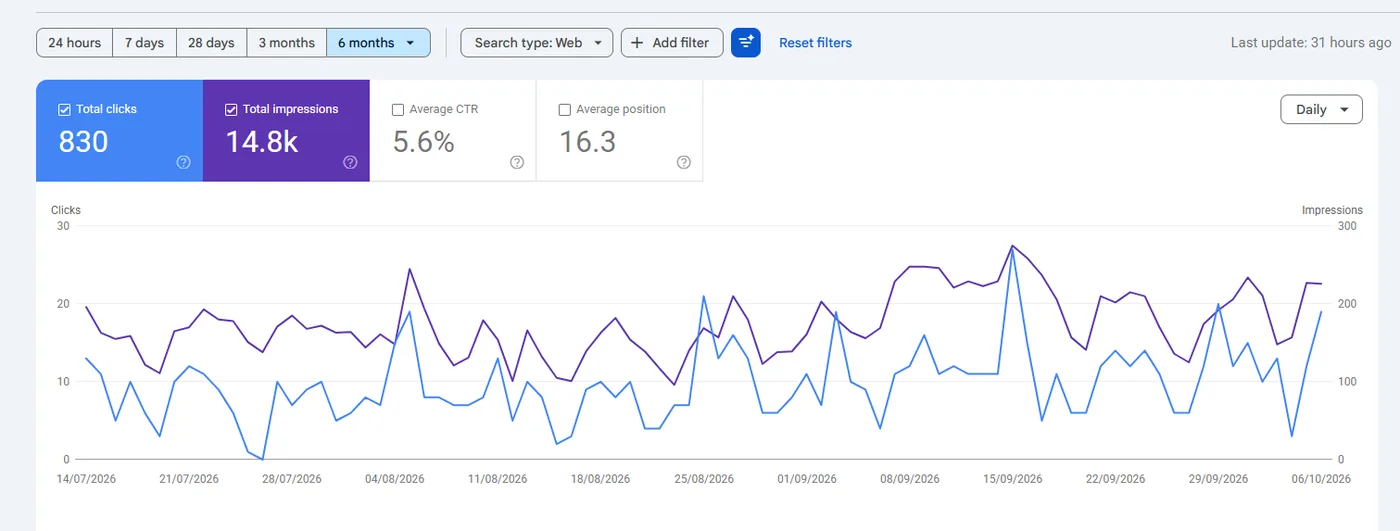
| First 6 weeks | 11.4 clicks a day (up from 8.2), 195 impressions a day (up from 154). Average position unchanged |
| The honest bit | 99% of clicks are people searching the brand name. Non-brand traffic is close to zero |
Why move at all
The move was my recommendation. Lovable gets a site up fast. This one looked fine. Underneath, it had problems I’d rather not leave a client with:
- Thin HTML. Google got a near-empty page, with the content loaded by JavaScript afterwards. Search engines can cope with that. AI search tools mostly can’t, so they had very little to read.
- No real 404. Pages that didn’t exist didn’t say so.
- Titles and descriptions that were nearly identical. Page after page, the same few words. Nothing told Google which page answered what.
- Every edit was a job. Changing a sentence meant either prompting the AI or calling a developer. Neither should be needed to fix a typo.
How it was done
Keep everything that works. Change only what’s broken.
- The URL structure stayed exactly as it was. Even the odd auto-generated addresses with random characters on the end. They’re ugly, but they’re indexed, and changing them gains nothing.
- A couple of misspelled URLs with zero impressions were fixed and 301-redirected. Nothing else moved.
- The old site was crawled and mapped before any build work started.
- I worked with the developer from day one. SEO went into the build, not into a checklist at the end.
What happened
Google never saw a gap. Clicks went up on launch day and stayed up.
| Per day | 6 weeks before | 6 weeks after | Change |
|---|---|---|---|
| Clicks | 8.2 | 11.4 | +39% |
| Impressions | 154 | 195 | +26% |
| CTR | 5.3% | 5.9% | slightly up |
| Avg. position | 16.4 | 16.3 | unchanged |
Rankings held. The site simply gets shown more often for the same searches. Weekly clicks ran 48–71 before the move and 68–85 after.
Two caveats. Search Console was only added in mid-July, so the “before” is six weeks, not a year. And the numbers are small, so I’m looking at the trend, not the odd spike.
Enquiries
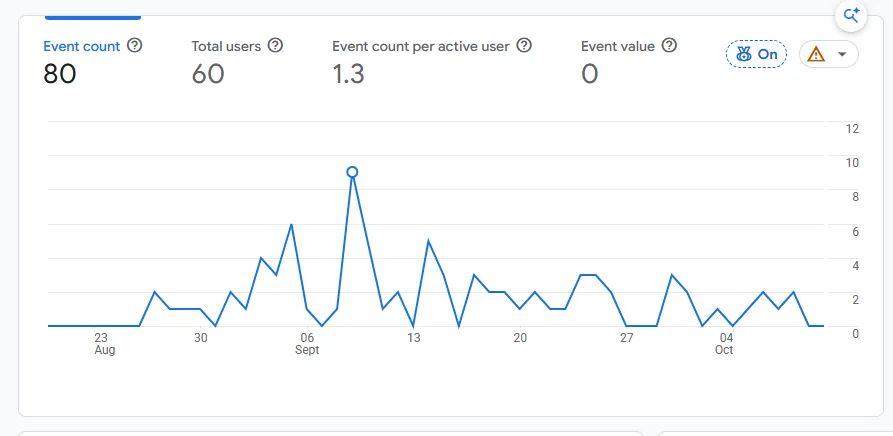
GA4 went in with the new site. In the first six weeks it tracked 80 form clicks from 60 organic users.
Is that up? I can’t tell you. The Lovable site had no analytics at all, so there’s nothing to compare against. Add that to the list of things it didn’t have.
The honest bit
Nearly every click is someone searching the company by name. Of the clicks Google ties to a query, 611 out of 614 are branded.
The site does show up for non-brand searches. Searches like “online retail storage” and “ecommerce storage solutions” added up to around 5,700 non-brand impressions. But the site sits around positions 18 to 27 for its best of them, and nobody clicks that far down.
So the migration did its job: it protected the brand traffic and nudged it up. It didn’t create non-brand traffic, and no migration does that on its own. What changed is that there’s now a site that content and links can actually build on. Before, there wasn’t.
What I’d tell anyone reading this
If search matters to your business, don’t start on Lovable or any other AI site builder. Moving off one later costs more than building it properly the first time.
FAQ
Questions about this case study
Is a website built with Lovable bad for SEO?
Not automatically, but this one had real problems. Google received thin HTML with the content loaded by JavaScript afterwards, missing pages didn’t return a real 404, and titles and meta descriptions were nearly identical across pages. On top of that, every content edit needed an AI prompt or a developer. Some of this can be patched on the platform, but for a site where search matters, moving it was the better long-term call.
Will migrating from Lovable to WordPress lose my rankings?
It can, if URLs change or redirects are missed. In this case the URL structure was kept exactly as it was, the old site was crawled and mapped first, and I worked with the developer from day one. Google never saw a gap: clicks went up on launch day and stayed up.
Should I change my URLs during a migration?
Only if there is a clear reason. Every changed URL is a redirect and a small risk. Here, even the odd auto-generated addresses stayed as they were, because they were indexed and changing them would have gained nothing. Only a couple of misspelled URLs with zero impressions were fixed and 301-redirected.
How can I tell if my site serves thin HTML to Google?
Compare the raw HTML with what you see in the browser. View the page source, or use URL Inspection in Search Console and look at the crawled page. If the main content, headings and links are missing from the raw HTML and only appear after JavaScript runs, the site is relying on rendering. Google can usually cope with that; many AI search tools can’t.
Why didn’t the migration bring in non-brand traffic?
Because a migration protects what a site already has; it doesn’t create new demand. Nearly all of this site’s clicks were brand searches before the move and still are. The site does appear for non-brand searches, but around positions 18 to 27. The difference now is that it has a foundation that content and links can build on.
More case studies
Two more, same honesty.
New build · UK
~5 calls/day
from organic search, three months after launch
SEO built in before launch
A brand-new domain, set up right from day one. Zero to ~60 organic clicks a day in 13 weeks.
Audit & maintenance · Shopify
+53%
organic search revenue, year one vs the year before
A year of technical SEO on Shopify
Broken links, thousands of 404s and category pages sending Google mixed signals. Fixed.
Built your site with an AI tool?
I’ll tell you what Google actually sees, and whether it’s worth moving.